Best cut-resistant work gloves
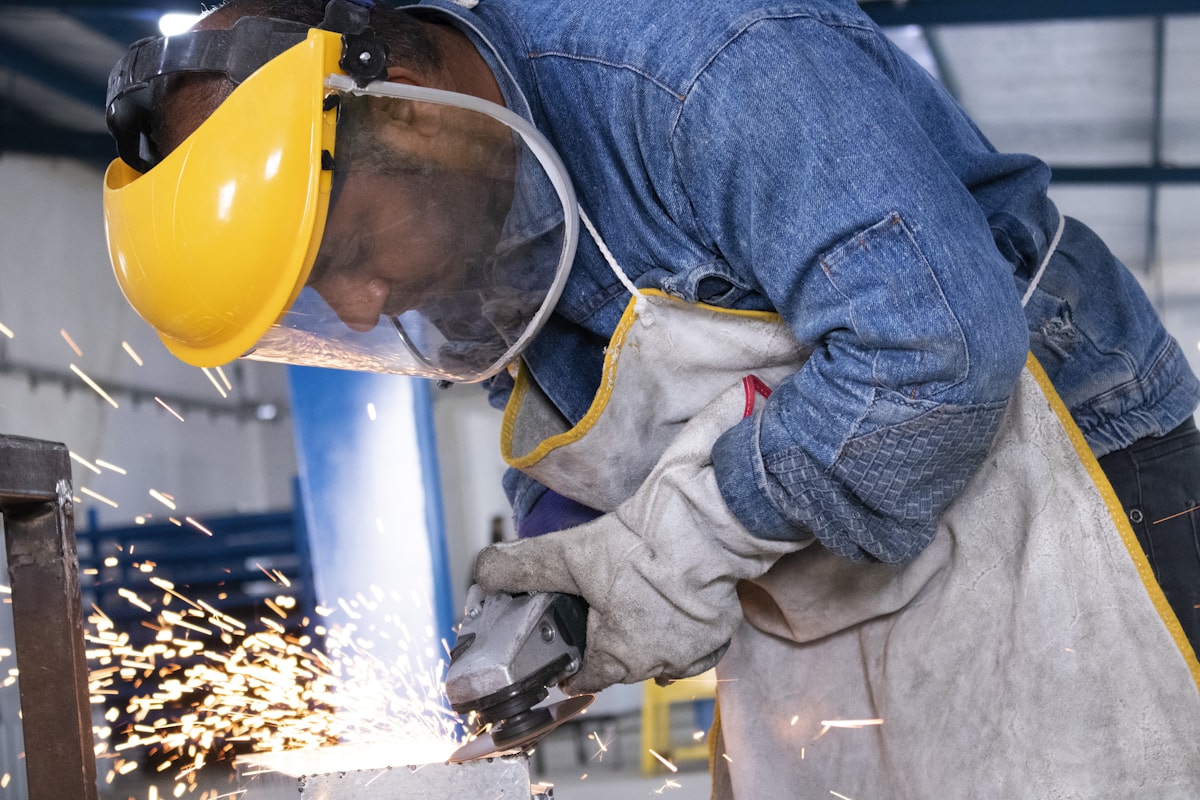
Cut-resistant gloves only help if the rating matches the blade or edge you face and the glove still lets you work. This guide from HPC Gloves focuses on ANSI/ISEA cut levels, common liner materials, and a short buying checklist. For the full rating table, use the ANSI cut levels and EN 388 reference.
Start with the cut risk, not the package claim
"Cut resistant" is not "cut proof." A light A2 glove that feels great for cartons will fail quickly against clean sheet metal edges. A stiff A7 glove can save skin on glass but will slow fine assembly if you wear it all day. Name the sharp object and how long your hands stay on it.
- Light: cardboard, light packaging, general warehouse handling
- Medium: stamped metal parts, appliance work, food processing knives
- High: plate glass, razor knives in demo, heavy sheet metal fabrication
ANSI/ISEA cut levels in plain language
North American product labels usually show ANSI/ISEA 105 cut levels from A1 (lowest) to A9 (highest). The number is a lab result, not a guarantee for every blade angle or dullness. Use it as a minimum threshold for the task, then check grip and fit.
| Typical level band | Common use cases | Notes |
|---|---|---|
| A1–A2 | Light abrasion, cartons, soft materials | Often enough for general material handling only |
| A3–A4 | Light metal, assembly, many warehouse knife tasks | Popular balance of protection and dexterity |
| A5–A6 | Sheet metal, glass handling, higher knife exposure | Watch for bulk and reduced feel |
| A7–A9 | Severe cut hazards, specialized fab and glass work | Pair with training; do not treat as armor |
Liner materials that show up in good gloves
- HPPE and similar engineered yarns: common core for mid to high cut levels with decent comfort.
- Steel or glass fiber blends: help push ratings higher; can feel stiffer and may irritate if the liner is damaged.
- Aramid fibers: useful for cut plus some heat; not a substitute for a true welding glove.
Coatings and palm choices
The cut liner does the rating work. The coating decides whether you can hold oily steel or dry glass.
- Polyurethane (PU): good dry grip and fine parts handling
- Nitrile foam: strong oily metal grip for fab shops
- Latex: wet grip in some settings; watch for latex allergy
- Sandy or microfoam nitrile: mixed wet/dry industrial work
Knit gauge and why it changes feel
Cut-resistant knit gloves are described by gauge, which is the number of needles per inch on the knitting machine. Higher gauge means a tighter, thinner knit with more dexterity and less bulk. Lower gauge means a looser, thicker knit that holds more yarn and tends to feel warmer and stiffer.
| Gauge band | Typical feel | Where it fits |
|---|---|---|
| 7 to 10 gauge | Thick, warm, durable | Cold storage, heavy handling, low-dexterity tasks |
| 13 gauge | The all-rounder | General industrial, assembly, mid cut levels |
| 15 to 18 gauge | Thin, close fit, high feel | Small parts, electronics, sharp work that still needs control |
Gauge and cut level are independent. An 18-gauge glove can still carry an A6 rating thanks to engineered yarns, so do not assume a thin glove is a low-cut glove. The trade is usually comfort and touch versus durability and warmth.
Cuff style and sleeve overlap
- Knit wrist: the default for general work. Snugs the cuff, holds the glove on, and works under most sleeves.
- Slip-on (open cuff): fast on and off for warehouse and pack-out work, but can slide down during overhead tasks.
- Safety cuff (rigid insert): protects the wrist from scrapes and lets the glove release under pull-in force. Common on demolition and material handling.
- Gauntlet (long cuff): covers the forearm for spark, heat, or chemical overlap. Use it when the hazard reaches past the wrist.
Match cuff length to the sleeve or suit interface. A short cuff that leaves a gap with your sleeve is a common way to turn a small splash or spark into a recordable injury.
Buying checklist
- Confirm minimum ANSI cut level for the sharpest regular task on the shift.
- Pick coating for the surface: dry parts, oily metal, or wet packaging.
- Choose cuff length (knit wrist vs safety cuff) for snag risk and sleeve overlap.
- Size with the glove size chart. Loose gloves fold under a blade.
- Order a sample pair before a full case if the crew has never worn that model.
- Set a replace-on-damage rule. A cut liner with a slice is done.
What "best" means on this page
There is no single best cut-resistant glove for every trade. The best pair is the lowest cut level that still covers the hazard while preserving grip and feel. If your work is mostly framing, fasteners, and general site handling, also read the construction gloves guide. For chemical splash, switch to the chemical-resistant guide instead of stacking cut ratings alone.
Common buying mistakes
- Chasing the highest cut level on the shelf. An A7 glove on a job that needs A3 leaves hands tired and often bare by lunch. Match the level to the sharpest regular task.
- Ignoring coating. A high cut liner with no grip still drops oily stock, and a dropped sheet is a cut hazard all on its own.
- Sizing up for comfort. Loose gloves fold at the palm, snag on stock, and reduce cut protection. Use the size chart and pick the true size.
- One model for the whole crew. Tasks vary across a shift. Kit two or three cut levels rather than forcing one pair onto framing, demo, and finish work.
- Trusting the box claim alone. Verify the rating is for the model and size you issue, and that it matches the standard (ANSI A1 to A9 or EN 388 letter) you think it does.
When to retire a cut-resistant glove
Cut-resistant knit gloves do not fail safely. Once the liner is damaged, the rating is gone in that spot. Pull a pair from service when you see any of the following:
- A visible slice, hole, or run in the knit, even small.
- Coating peeled off the palm or grip zone.
- Stiffening from heat, solvent contact, or repeated washing.
- A dirty, oil-soaked pair you cannot clean for the next shift.
- Any sign the wearer has already been cut through the glove.
Cut-resistant glove FAQ
What ANSI cut level do I need for sheet metal?
For routine sheet metal handling, plan on A4 to A6. Light stamped parts can sometimes sit at A3, but clean plate edges and glass usually call for A5 or A6. Pair the cut level with an oily-grip coating like foam or sandy nitrile, since metal stock is often oily or slippery.
Are higher cut level gloves always safer?
No. A glove rated far above the hazard usually gives up dexterity, breathability, and comfort. Crews pull them off for fine work, which removes protection entirely. The lowest cut level that still covers the sharpest regular task is the safer pick.
How long do cut-resistant gloves last?
There is no fixed lifespan. Heavy use on sheet metal can wear out a pair in days; light warehouse work can last weeks. Inspect before each shift and replace on damage, not on a calendar date.
Does a cut level protect against needles and punctures?
No. Cut levels test resistance to a sliding blade, not a needle point pressing straight in. Needlestick and fine puncture work needs specific puncture-rated gloves. Cut resistance and puncture resistance are measured on different equipment.
Check the ratings yourself
If a supplier quotes you a cut level, these are the four places that define what the number means and who is responsible for choosing it:
- International Safety Equipment Association (ISEA): Holds ANSI/ISEA 105, the standard the A1 to A9 bands on this page come from.
- ASTM International: ASTM F2992, the TDM-100 cut test method that turns a glove sample into a gram-force number.
- CEN and CENELEC: EN 388, for the European labels that carry a digit string and a separate TDM cut letter.
- OSHA hand protection, 29 CFR 1910.138: The US employer duty to select hand protection from an actual hazard assessment, which is the step this guide feeds into.